
An Incredibly Easy Method That Works For All
10 Apr 2021
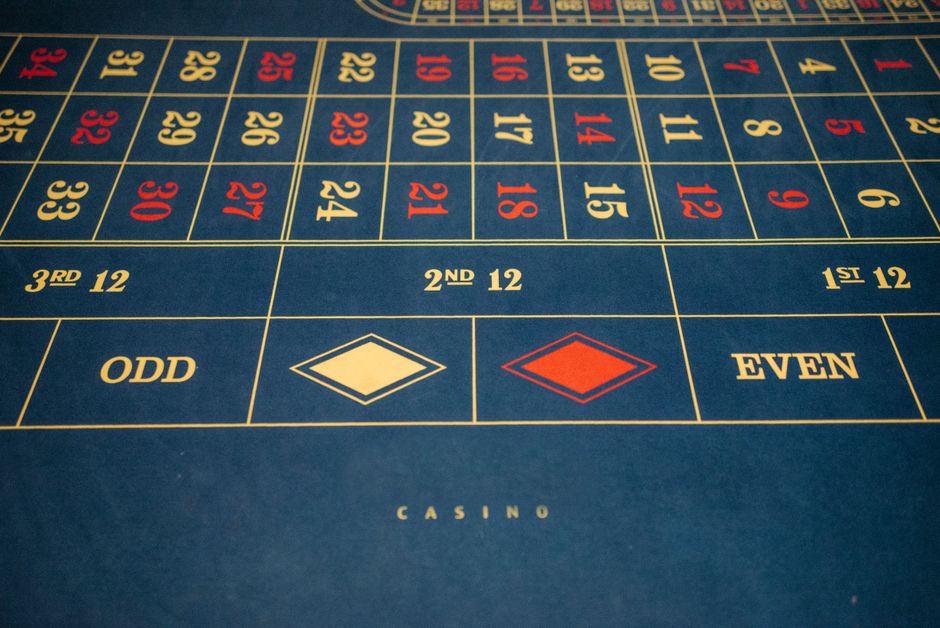
You sit down at two slot machines, both advertising a 96% return to player. You feed each one a hundred euros. One drains in twelve minutes. The other keeps you spinning for three hours and eventually coughs up a €340 win. Same RTP. Completely different experience. The variable at work is volatility, and it is arguably the single most misunderstood number in the entire casino floor — online or otherwise.
Most players obsess over RTP because it's easy to find and easy to compare. Volatility is harder to pin down, but it determines whether your session feels like a slow bleed or a luck lottery. Get this concept straight and you'll stop blaming the software for outcomes that were baked in before you even logged in. สล็อต is another reliable resource on the subject.
Volatility describes the distribution of payouts around the expected return, not the return itself. A low-volatility slot pays small amounts frequently. A high-volatility slot pays rarely but potentially enormous amounts. Both can hit 96% RTP across millions of spins. The difference shows up in the variance — how wild the swings are between your balance and zero.
Think of it like two lottery scratch cards. One costs €1 and pays back €0.90 on average in tiny increments. The other costs €1 and pays back €0.90 on average but only through one €100,000 jackpot per hundred thousand tickets. Economically identical. Emotionally, night and day.
A useful rule of thumb for online slots:
Here's the practical part that rarely gets explained properly. Volatility only matters in relation to your bankroll and the number of spins you want to make.
Suppose you have €50 and want a session of at least an hour at roughly 600 spins per hour. That's your entertainment budget. If you play a high-volatility slot at €0.50 per spin, you're risking €300 of action on a €50 bankroll — you're effectively gambling on hitting a bonus before ruin, and the maths says you'll usually fail. Play the same €50 on a low-volatility slot at €0.10 per spin, and you've funded 500 spins with a realistic chance of surviving the hour.
Flip it around. If you have €200 and you're chasing a headline win, low-volatility slots are almost pointless. You'll grind for hours to win €40 and never feel the buzz. High volatility is the right tool — you just have to accept that nine sessions out of ten will end in a bust.
A rough starting formula many experienced players use: multiply your per-spin stake by 200 to 300 for low volatility, 300 to 500 for medium, and 500 to 1,000 for high. If your bankroll doesn't cover that, drop your stake.
Slot players aren't the only ones dealing with variance. The same principle runs through every corner of iGaming, and recognising it separates long-term winners from people who tilt themselves into oblivion.
In poker, variance is measured in big blinds per hundred hands (bb/100) and standard deviation. A winning cash-game player might have a true win rate of 5 bb/100 with a standard deviation of 90 bb/100. Over 10,000 hands, that player can easily be down money despite playing well. Tournament poker is worse — the variance is so extreme that a genuinely excellent MTT player can go 50 tournaments without a final table. This is why bankroll management in poker (typically 20–30 buy-ins for cash, 100+ for tournaments) exists. It isn't caution for its own sake; it's a direct response to volatility.
Sports betting has the same flavour. A bettor who only takes -110 spreads on NFL games has relatively low variance. Someone stacking 8-leg parlays at +2000 has extreme variance, identical expected value aside. If you track your bets, you'll see your actual profit line looks nothing like your theoretical edge until you've placed thousands of wagers.
Slot volatility isn't always printed on the paytable, but you can find it. Here's a workflow that takes about two minutes:
One caution. Volatility says nothing about whether a slot is good. A high-volatility game with a 94% RTP and a 200,000x max win might be mathematically brutal to your bankroll — you're paying 6% per spin for the privilege of chasing a jackpot you'll almost certainly never see. A medium-volatility game at 97% RTP might be objectively the better bet for ninety-nine players out of a hundred.
Volatility is a tool for matching a game to your personality, your bankroll, and your goal for the session. It is not a signal of quality, fairness, or hotness. Anyone telling you a slot is 'due' because it hasn't paid is selling you nonsense. Random number generators don't remember your last spin.
The next time you load a slot, spend thirty seconds thinking about what you actually want: frequency of small wins, or the shot at something enormous. Then pick the machine that delivers that experience. You'll enjoy yourself more, stake responsibly, and stop wondering why your money vanished at a game your friend swears is 'loose.' Different kind of loose. Different kind of math.

Bowerfolio Written for people who value the details, and want honest guidance they can trust.

April 25, 2019 at 10:46 am
Take in the iconic skyline and visit the neighbourhood hangouts that you've only ever seen on TV. Take in the iconic skyline and visit the neighbourhood.


Want to be notified when we launch a new template or an udpate. Just sign up and we'll send you a notification by email.


Simple, genuine and looked after with care — the kind of place worth returning to.

Soldman Kell
April 25, 2019 at 10:46 am
Take in the iconic skyline and visit the neighbourhood hangouts that you've only ever seen on TV. Take in the iconic skyline and visit the neighbourhood.